




Closing or Covering One Eye
Squint: When eyes don’t align vision needs attention
Squint can appear in childhood or adulthood and may cause eye strain, double vision, or lazy eye if left untreated. A detailed eye check-up can help identify the cause and guide proper correction.

What is Squint?
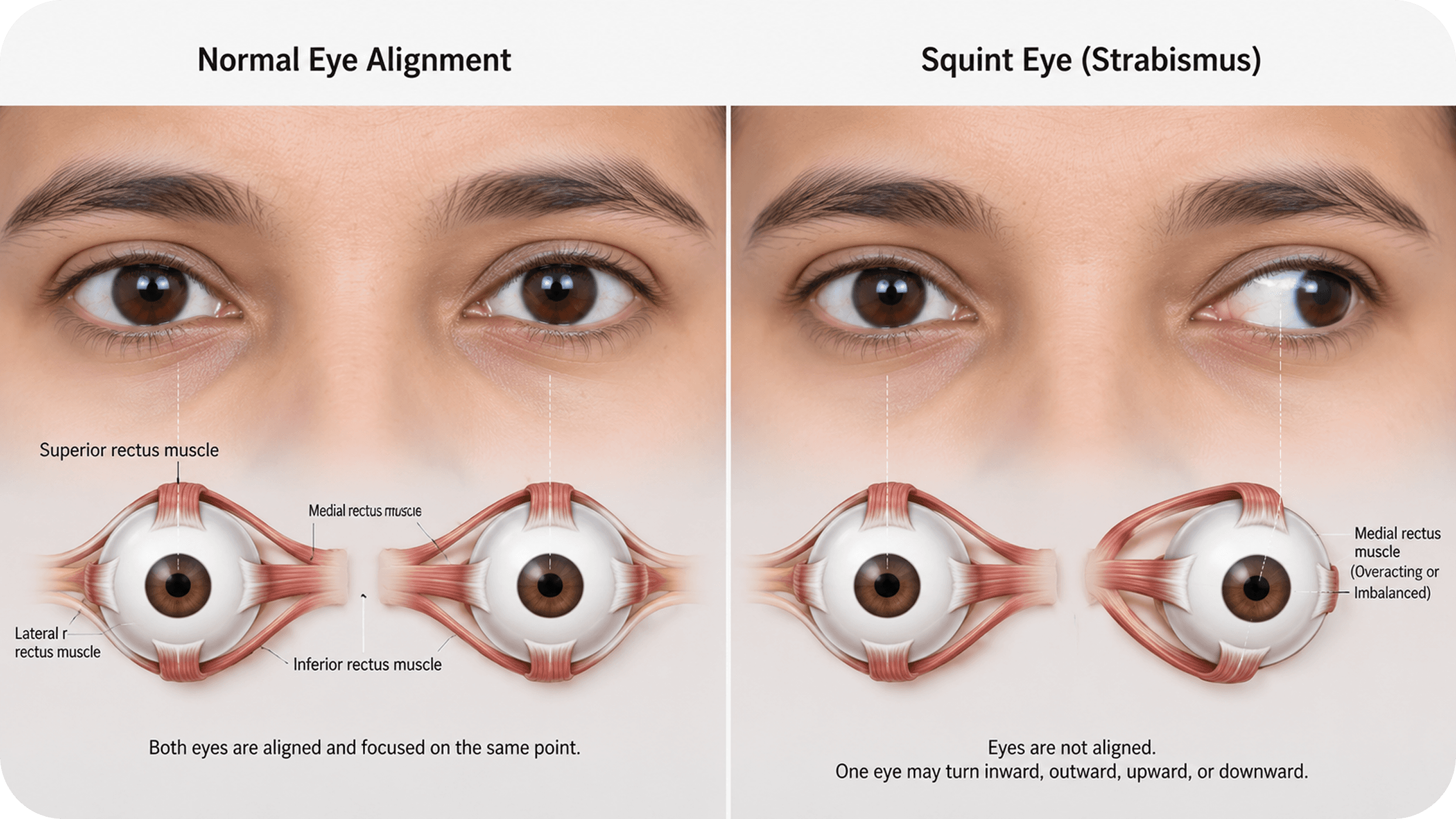
Squint, medically called strabismus, is an eye condition where the eyes are not aligned properly.
One eye may look straight while the other eye turns inward, outward, upward, or downward.
It may be constant or may appear only sometimes, especially when the child is tired, sick, or focusing on an object.
In children, untreated squint can affect vision development and may lead to lazy eye, also called amblyopia.
In adults, a newly developed squint may cause double vision, eye strain, or difficulty focusing.
Symptoms you may notice
Squint may be visible all the time or may appear only during certain activities.
What can lead to Squint?
Squint can happen due to different reasons, and the cause may vary from child to child or adult to adult.
Hypertropia
One eye turns upward compared to the other eye.
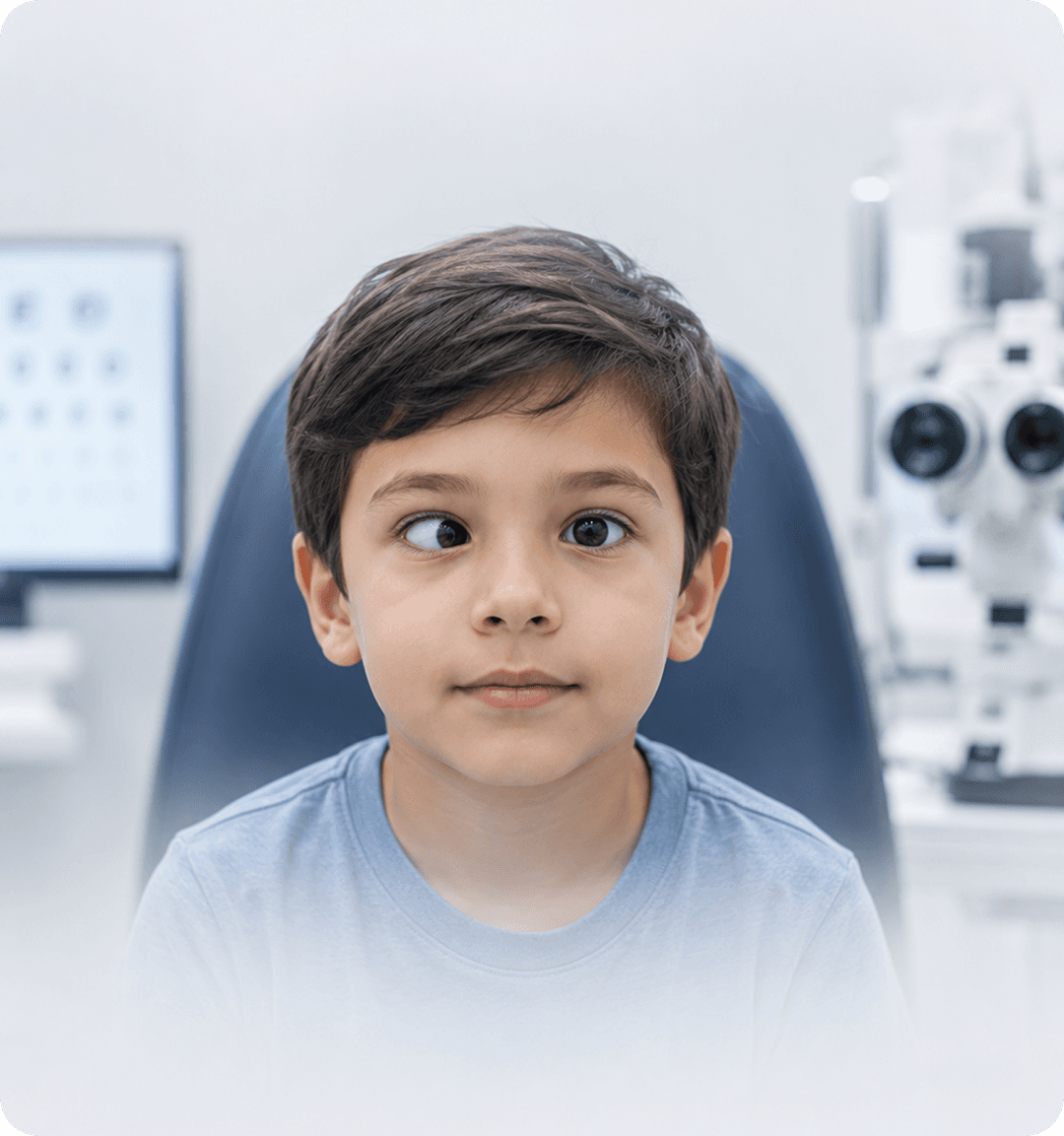
Esotropia
The eye turns inward, toward the nose.
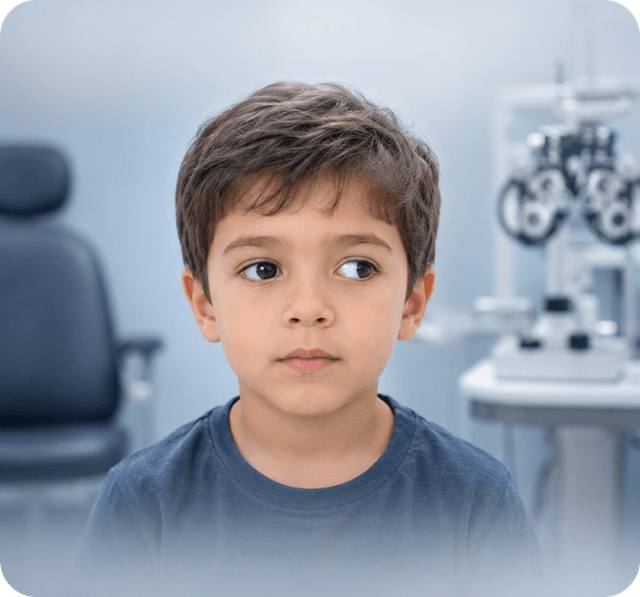
Exotropia
The eye turns outward, away from the nose.
Hypertropia
One eye turns upward compared to the other eye.
Esotropia
The eye turns inward, toward the nose.
How Squint is diagnosed
A squint evaluation is more than just checking eye power. The doctor checks eye alignment, eye movements, vision in both eyes, glass power, depth perception, and whether lazy eye is present.
Early assessment is especially important in children because timely treatment can help protect vision development.
Treatment may include glasses, patching, eye exercises, prism glasses, or eye muscle surgery depending on the type and cause of squint.
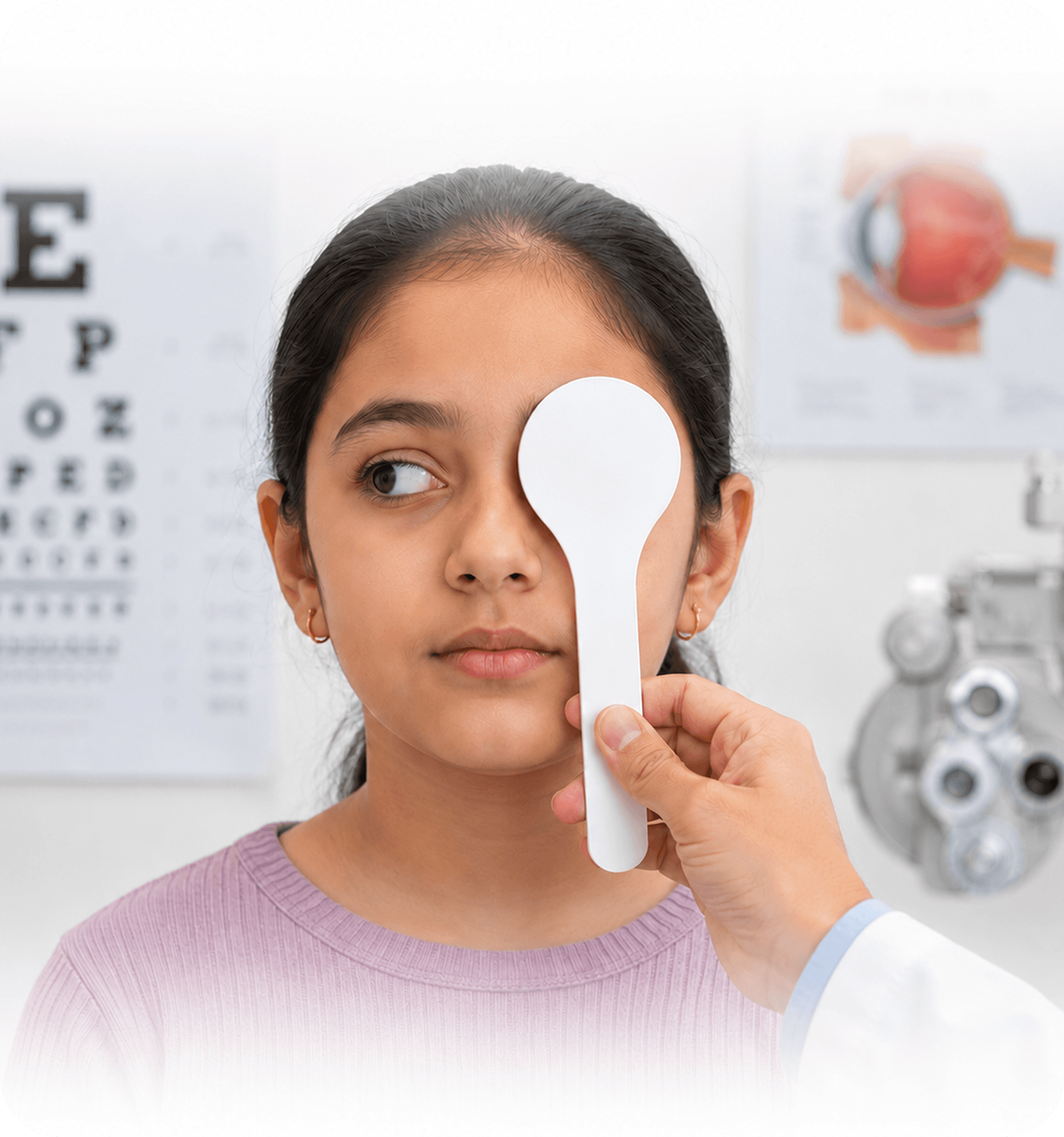
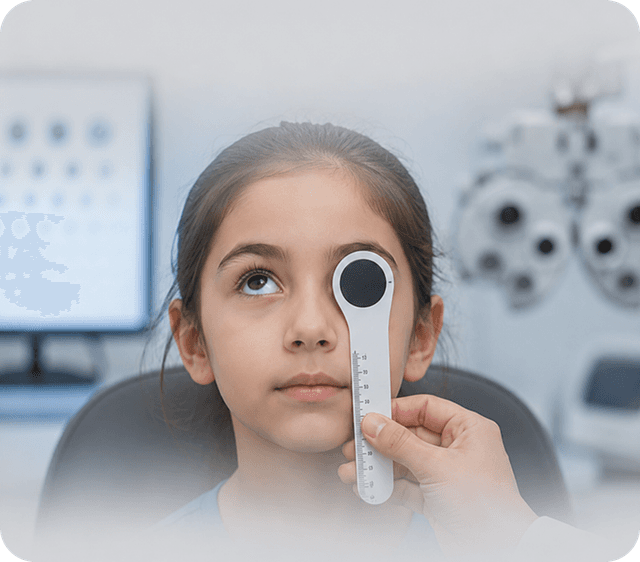
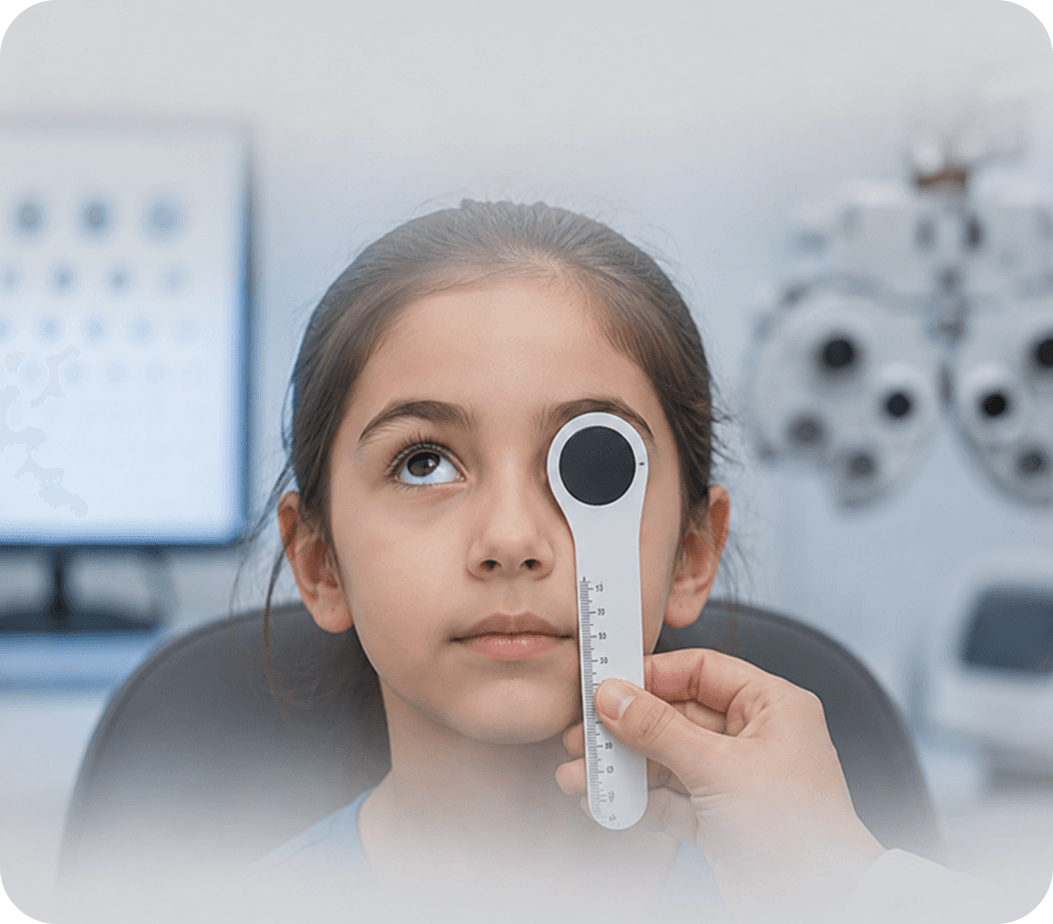
1. Cover Test
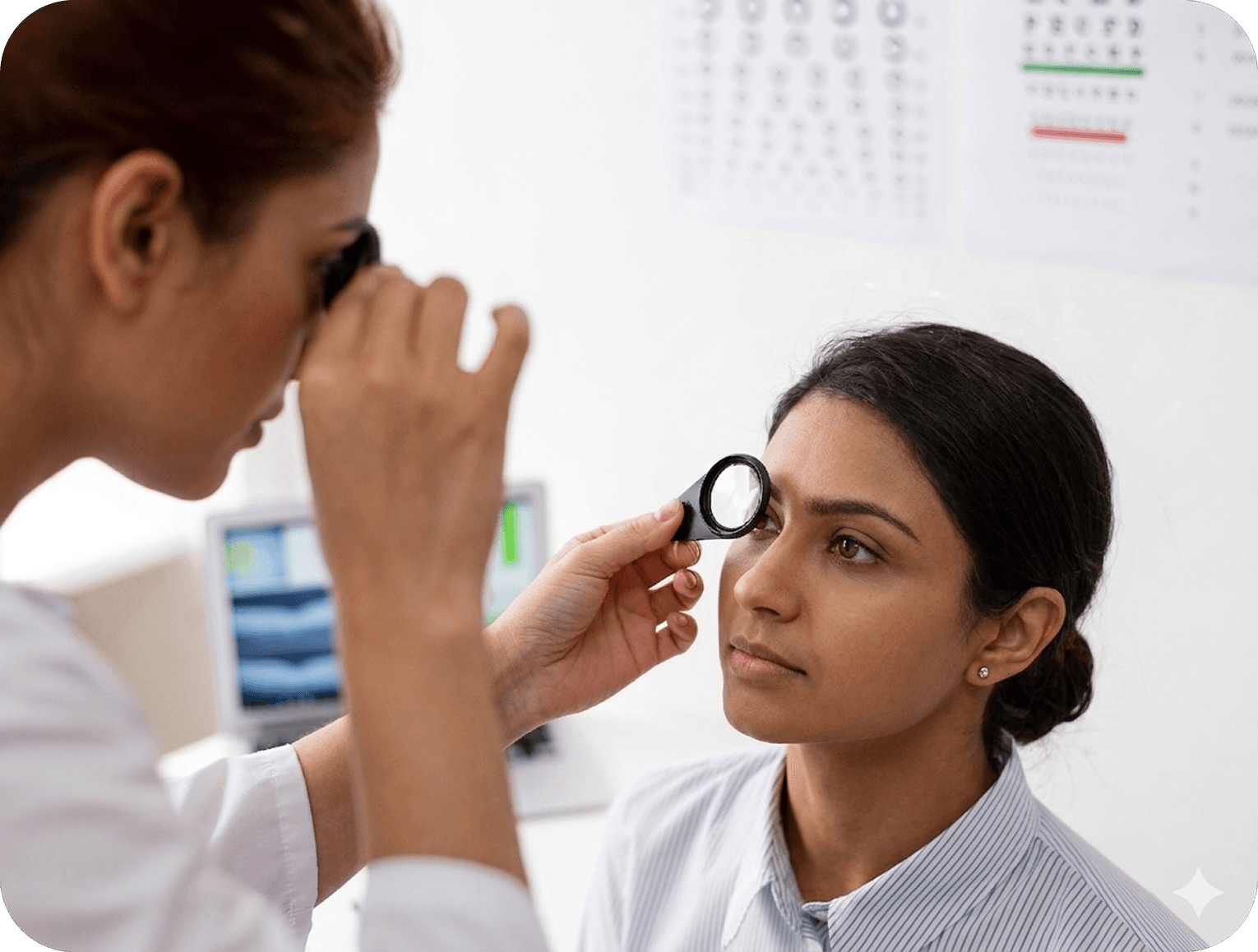
The specialist covers one of your eyes with an opaque paddle and watches how the other eye moves to focus on an object, which reveals hidden or visible misalignment.
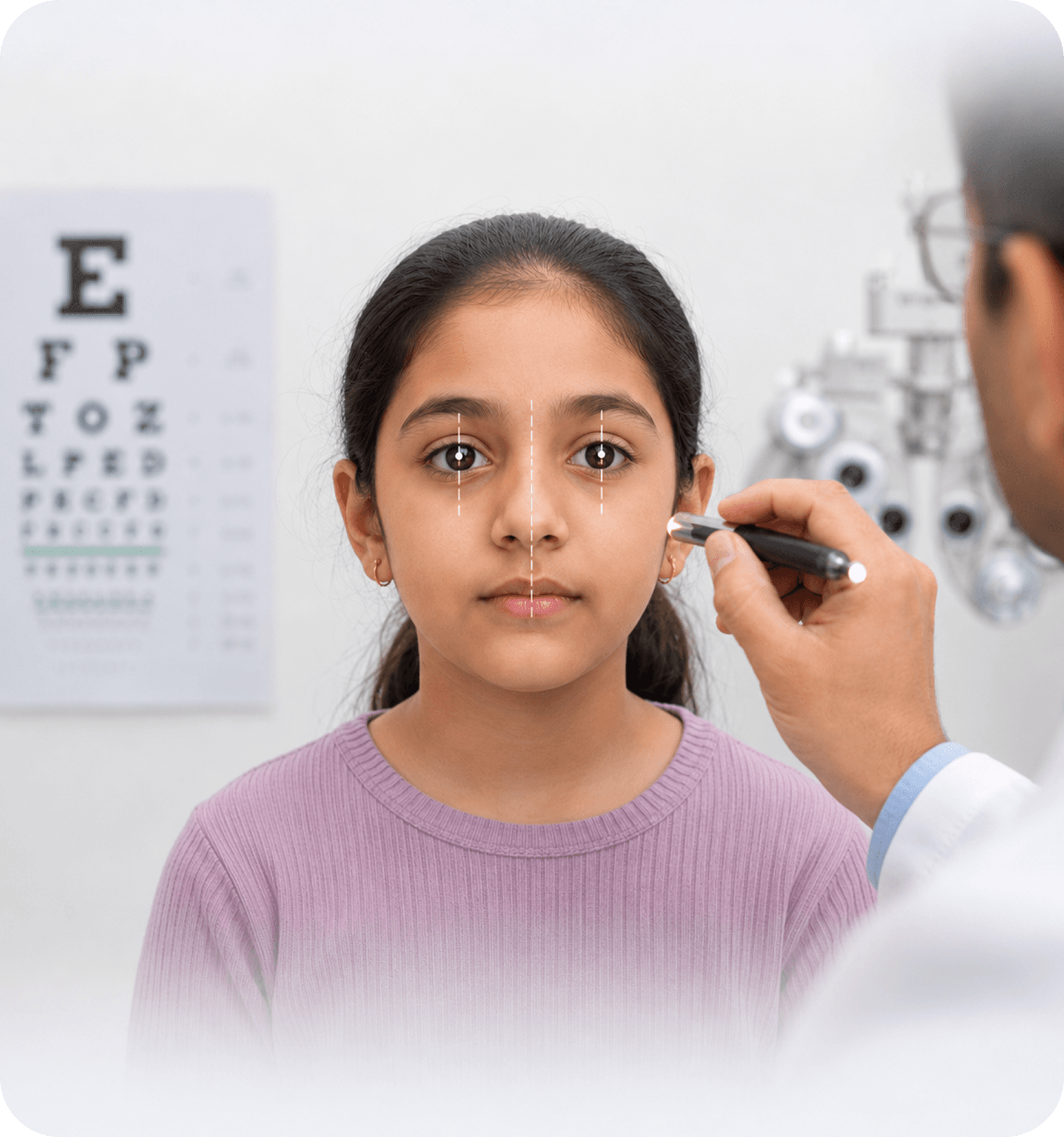
2. Corneal Light Reflex Test
A bright light is shone directly into the eyes. The specialist observes where the light reflects off your pupils to check if your eyes are pointing at the same spot.
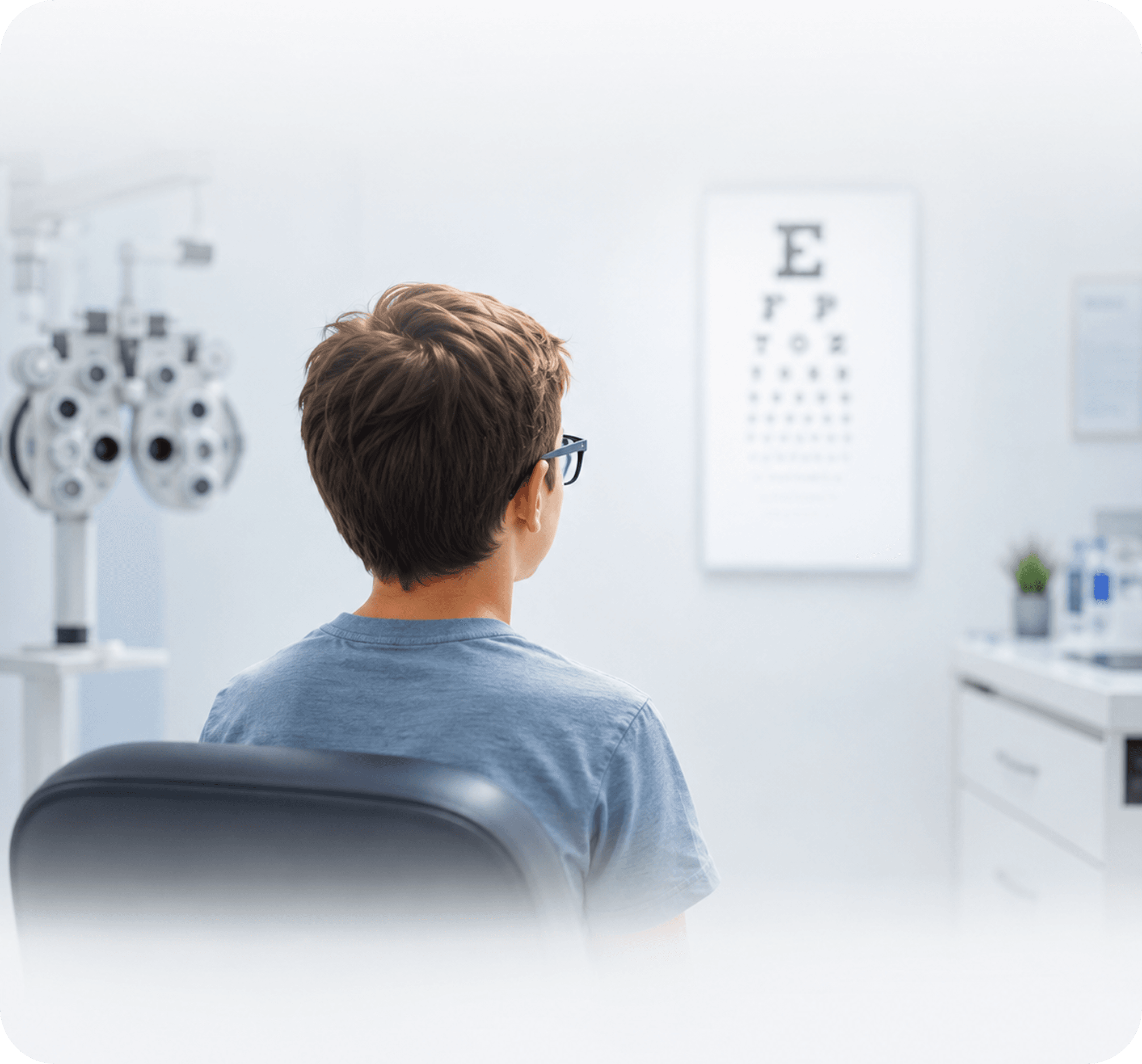
3. Visual Acuity Test
You read letters on a standard eye chart to measure how clearly each eye can see independently.
4. Retinal & Refraction Examination
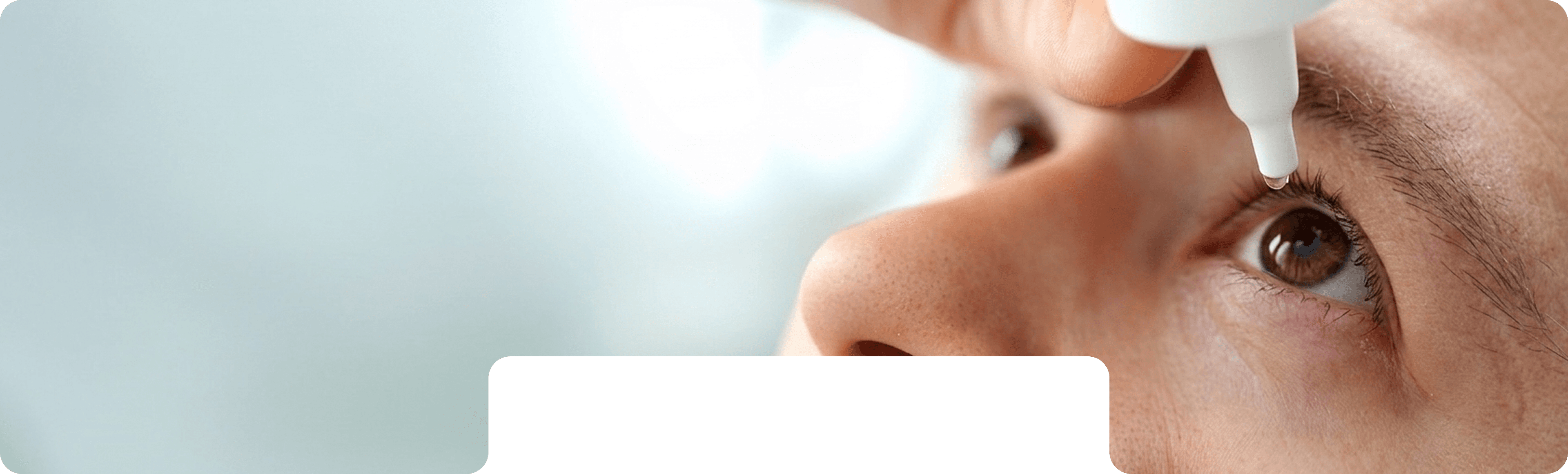
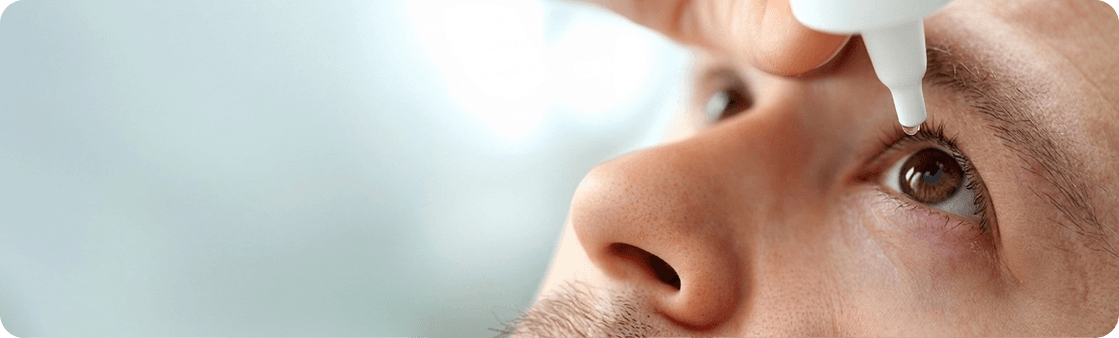
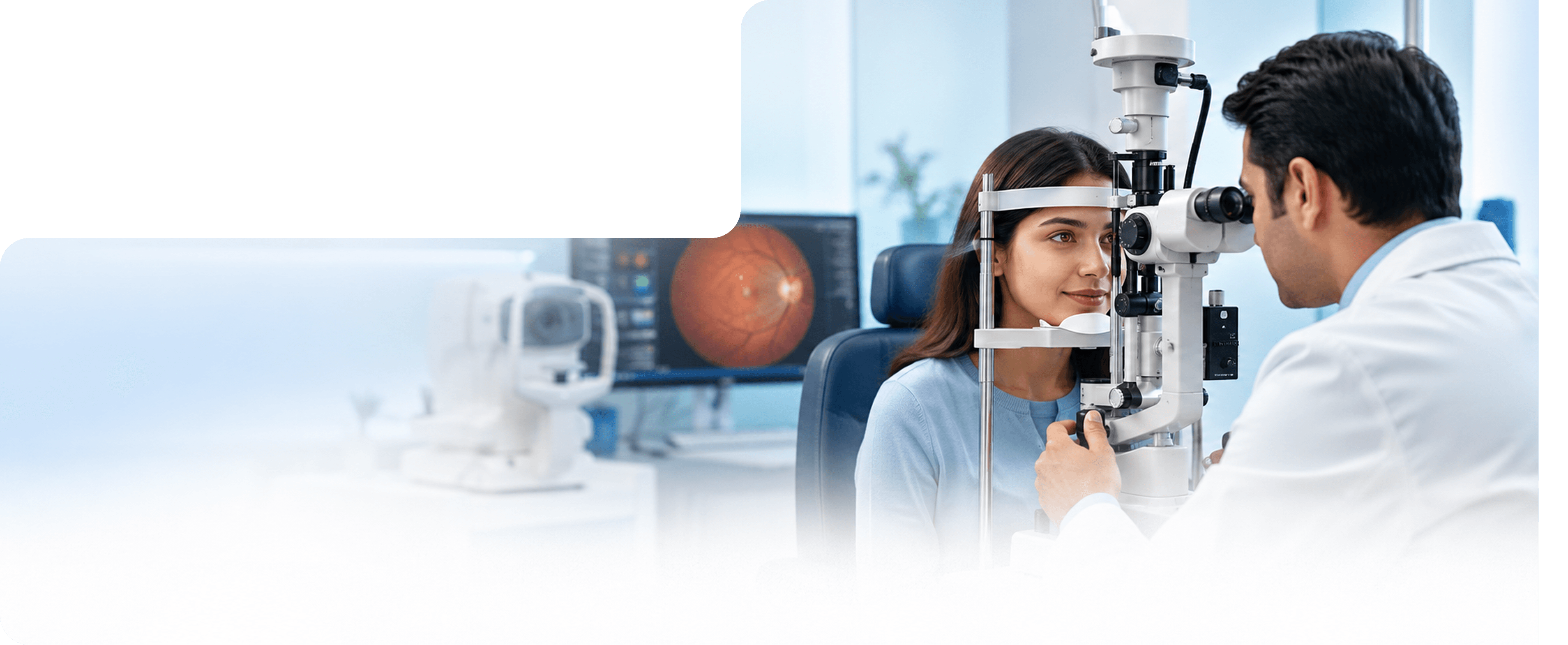
Eye drops may be used to dilate your pupils and relax the focusing muscles. This allows the doctor to check for underlying vision issues (like nearsightedness or farsightedness) that might be causing the squint, and to inspect the internal structures of your eye.
1. Cover Test
The specialist covers one of your eyes with an opaque paddle and watches how the other eye moves to focus on an object, which reveals hidden or visible misalignment.
2. Corneal Light Reflex Test
A bright light is shone directly into the eyes. The specialist observes where the light reflects off your pupils to check if your eyes are pointing at the same spot.
Clinical expertise
Squint care at Pixel Eye Hospital is provided by experienced ophthalmologists with expertise in pediatric eye care and eye muscle disorders.

Dr. Abdul Rasheed
An ophthalmic surgeon trained at AIIMS New Delhi, with experience in squint diagnosis and management across age groups. He also works closely with patients for cataract and LASIK care, with a clear, patient-focused approach.

FAQs
For personalised guidance on squint diagnosis, treatment options, and vision development, schedule a consultation with our squint specialists. Early diagnosis and timely treatment can improve eye alignment, support healthy vision, and help prevent long-term complications such as lazy eye or loss of binocular vision.
Squint, also known as strabismus, is a condition in which the eyes do not align properly. One eye may look straight while the other turns inward, outward, upward, or downward. It can affect both children and adults.
Squint can result from uncorrected refractive errors, poor coordination of the eye muscles, neurological conditions, reduced vision in one eye, family history, or congenital eye alignment problems. A comprehensive eye examination helps identify the underlying cause.
Yes. Squint commonly develops during infancy or early childhood. Early diagnosis is important because untreated squint may affect normal visual development and increase the risk of lazy eye (amblyopia).
Yes. Adults can develop squint due to nerve disorders, eye muscle problems, trauma, thyroid eye disease, stroke, or other medical conditions. Sudden onset of squint should always be evaluated promptly by an ophthalmologist.
It can. Some people experience double vision, poor depth perception, or eye strain. In children, untreated squint may lead to lazy eye if the brain begins to ignore the image from one eye.
Squint surgery may be recommended when glasses or other treatments cannot adequately align the eyes. The procedure aims to improve eye alignment, binocular vision, and appearance, depending on the individual's condition.
Squint surgery is a commonly performed and generally safe procedure when carried out by experienced ophthalmic surgeons. Your doctor will discuss the expected benefits, possible risks, and whether surgery is appropriate for your condition.
Some patients maintain good eye alignment after treatment, while others may require ongoing monitoring or additional treatment over time. Regular follow-up visits help ensure the best long-term outcome.
There is no single ideal age. Children with suspected squint should be evaluated as early as possible because timely treatment supports healthy vision development. Adults with new or longstanding squint can also benefit from appropriate treatment.
Consult an ophthalmologist if you notice one eye turning in a different direction, persistent double vision, frequent head tilting, poor depth perception, or any concern about your child's eye alignment. Early evaluation allows for timely diagnosis and appropriate treatment.
Patient Experiences
From patients who have already taken their first step toward clearer vision.

My father underwent cataract surgery here. The hospital is very clean, and the staff are highly professional. I had visited three other hospitals before, where everything felt disorganized. Pixel Eye is much more organised. Also, Dr. Rasheed and Dr. Poojitha are among the best doctors in ophthalmology, and I would wholeheartedly recommend them.

Very good experience at Pixel Eye Hospital. The service was excellent, and everyone was cooperative. The consultation went smoothly with proper guidance. Thanks to the doctor for the clear explanation regarding the treatment plan.
I underwent cataract surgery for both my eyes, and based on my lifestyle the doctor suggested an EDOF lens. Everything went very well, and my vision is now clear and comfortable for both distance and near. Thanks to Pixel Eye Hospital and Dr. Rasheed.
I had an excellent experience with Dr. Rasheed. He is our family doctor. He performed two cataract surgeries for my family, and we are very happy with all the successful surgeries. Thank you to Pixel Eye Hospital, Dr. Rasheed, and the whole staff for the care.
I had a very good experience at Pixel Eye Hospital. I visited with a complaint of dry eyes, and Dr. Krishna Poojitha was extremely patient, professional, and kind throughout the consultation. She listened carefully to my concerns, explained the condition clearly, and suggested an effective treatment plan.
It is a really good hospital if you are planning for eye surgery. The staff are very supportive and make patients comfortable in Marathi, Hindi, or English. Dr. Krishna is super supportive with patients.